Welcome to the
CardioScienceLabs
Translational Cardiovascular Research Laboratories

Prof. Dr. rer. nat.
Ulrike Hendgen-Cotta
Head of the CSL
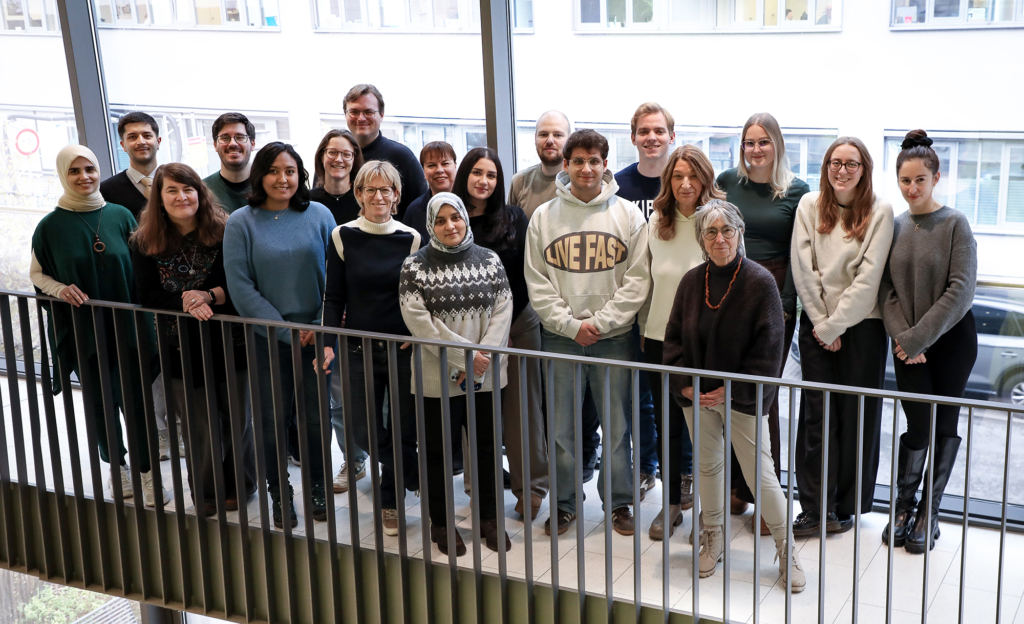
At the CardioScienceLabs (CSL), interdisciplinary teams conduct cutting- edge research illuminating causes and treatment options of cardiovascular biology and diseases, and train clinicians and scientists to become future interdisciplinary leaders of these fields. The CSL provide a home for a wide spectrum of investigations ranging from organismal to (sub)cellular to chemical level following the bed-to-bench-to-bed principle.
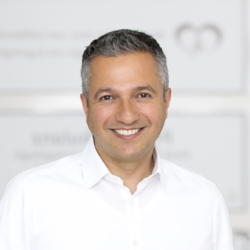
Univ.-Prof. Dr. med. Dr. h.c.
Tienush Rassaf
Director of the Department of Cardiology & Vascular Medicine
RTG 2989
The RTG 2989 focuses on the distinct cellular interfaces in reperfused acute myocardial infarction (repAMI), which include the immune system, the vasculature and the cardiomyocytes. Based on a highly synergistic approach, the RTG 2989 research projects are led by interdisciplinary teams of cardiovascular scientists in conjunction with experts from the field of infection and immunology. A successful implementation of new treatment strategies can only be achieved through the identification of a clinical problem, the characterization of the underlying cellular interfaces and the subsequent testing in patients known as the “bed-to-bench-to-bed”-principle. Taking this into account, the RTG 2989 is characterized by a novel program structure that provides outstanding doctoral students with the clinical and basic scientific skills required for an excellent training leading to successful research outcome and the characterization of new treatment options in the future. Key components of the RTG 2989 are: unified animal models of reperfused acute myocardial infarction, patient cohorts under supervision of the Cardiac Trial Unit (CTU), Tandem PIs consisting of a clinician and a basic scientist for each graduate, Internal Advisory Committees (IAC) and an ensuing mentoring program with a Translational Mentoring Board (TMB) and an External Scientific Advisory Board (ESAB).

Dr. rer. nat.
Katharina Groll
For further information please visit the RTG 2989 website or directly contact the RTG coordinator Dr. Katharina Groll. Application for doctoral scholarships for medical students is still open.
Neuigkeiten
1. Settelmeier S, Agranovski D, Steinhardt M, Waydhas S, Gering I, Cejka V, Morbach C, Störk S, Willbold D, Küppers R, Vogel J, Michel L, Carpinteiro A, Reinhardt HC, Dodel R, Rassaf T, Ross AJ, Hendgen-Cotta UB. Transthyretin stabilizer therapy increases naturally-occurring antibodies in ATTR cardiomyopathy. Amyloid. 2026:1-17. doi: 10.1080/13506129.2026.2651299.
-> Das Forschungsprojekt identifizierte einen bislang unbeschriebenen immunologischen Mechanismus bei der kardialen ATTR-Amyloidose, einer Erkrankung, bei der fehlgefaltete Transthyretin-Proteine das Herz schädigen und zu Herzinsuffizienz führen. Dabei konnten hochaffine, natürlich vorkommende Antikörper gegen Transthyretin bereits in Nabelschnurblut und bei gesunden Personen nachgewiesen werden, deren Titer sich bei Patienten sowie unter Therapie verändert. Diese Antikörper binden an eine für die Amyloidbildung entscheidende C-terminale Region und können so die Fehlfaltung des Proteins verhindern. Damit eröffnet dieser bislang wenig beachtete immunologische Aspekt neue Perspektiven für das Verständnis der Krankheitsmechanismen sowie für Frühdiagnose und Therapiekontrolle.
2. Hendgen-Cotta UB, Roth A, Beuck C, Messiha D, Settelmeier S, Shah SB, Korste S, Bravo-Rodriguez K, Blueggel M, Cansiz F, Martins Nascentes Melo L, Roesler J, Meckelmann SW, Schmitz OJ, Kaschani F, Kaiser M, Esfeld S, El Bounkari O, Bernhagen J, Brameyer S, Jung K, Schmitt LI, Leo M, Hagenacker T, Totzeck M, Minor T, Ehrmann M, Tasdogan A, Bayer P, Rassaf T. Reverse engineering of BNIP3 identifies a mitochondrial protective peptide. Nat Commun. 2026; 17(1):5359. doi: 10.1038/s41467-026-73993-2.
-> Die Studie identifiziert BNIP3 als zentralen Regulator mitochondrialer Zellschädigung und entwickelt mit B-017 einen Inhibitor dieses Signalwegs. Präklinische Untersuchungen zeigen, dass B-017 mitochondriale Schäden und Ischämie-/Reperfusionsschäden reduziert. Die Ergebnisse weisen BNIP3 als potenzielles therapeutisches Target aus.